
Prelude
During the early eighties a small group of Belgian audio professionals aligned themselves with
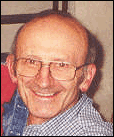
respected mathematician and locally renowned audio system designer Mr. Marcel Put, to
develop a loudspeaker that would sound totally natural whenever loud music was desired or
needed. From a modest laboratory and test facility, located in his native town of Lummen in
Belgian Limburg, Mr. Put embarked on an extensive research project with the objective of
finding a solution to the excessive levels of distortion typically experienced from listening to
medium and medium/high frequency spectrums produced by loudspeaker systems used for live
sound touring purposes at the time.
Conclusions
As a result of burning lots of proverbial “midnight oil”. Marcel recognized that it was not possible
to offer a solution to this problem within the confinements of the commonly practiced way of
utilizing horn loaded compression drivers to reproduce medium and high frequencies. The core
of the problem was found in that at high SPL levels these horn loaded electro-magnetic
transducers deliver as much as 25 to 50% unwanted and very audible harmonic distortion.
Another approach was called for.
New Options
By the mid eighties various driver technologies had been researched and mostly abandoned,
until by accident, a French speaker component manufacturer made a compact 7″ low frequency
driver. As it turned out this particular driver proved to be not very practical as a bass driver but
performed exceptionally well as a medium transducer. What first caught the attention of Marcel
was not only the clarity of the mid frequencies produced by this driver but also the unusual
efficiency of the device. Finally a totally Hornless design became an option.
The inside story
Contacts were made at engineering level with the manufacturer in France and an agreement
was reached to start a collaborative research program to further develop this exciting speaker.
Several versions were made and in association with a Belgian rental company; called Forceps.
assembled in purpose designed cabinets that could be stacked 4 to 8 high. These cabinets
consisted of two 15″ low frequency drivers, a single 12″ low mid driver, four of the mentioned 7”
drivers made by Audax and two high frequency drivers. All these drivers were mounted in such
fashion that they formed a vertical line. This was about 6 to 7 years before another French
speaker manufacturer introduced the first commercially available “line array” to the audio
community.
Drawbacks
This first fully hornless speaker system was named MPAD V1 and toured throughout Europe on
a controlled trial program. Although continuing research was benefiting the direction Marcel had
chosen to pursue, Audax found itself in financial trouble and was consequently purchased by a
well known American speaker component manufacturer. This however led to a change in
strategy and production of small quantities of specialized drivers was abandoned.
The Focal days
Suddenly Marcel found his research program without a manufacturing resource and after
months of confusion and uncertainty; a new alliance between ex-Audax engineers and Marcel
was formed. One of these engineers was Mr. Jacques Mahul, creator of the highly acclaimed JM
Lab brand of speakers as well as Focal HI-FI and automotive speaker components. Jacques set
up a manufacturing facility to produce small quantities of specialized drivers in his Father’s
foundry in St. Etienne, France. He sought to continue the R&D collaboration with Marcel which
resulted in a second generation 7” midrange driver that would reduce the number of units
required, to replace an A grade efficiency compression driver system, from 4 to 2. This was a
technological breakthrough and it was decided to prepare for larger quantity production of these
drivers under the Focal brand. Focal ended up supplying this second generation 7” driver and
15” drivers to Mr. Christian Heil for the famed V-DOSC speaker system.
The Post Focal days
Marcel found himself for the second time around without a supporting driver manufacturing
facility. Marcel’s 20+ years of research however by now had started to pay-off in substantial
knowledge of materials used in the manufacturing of these exciting 7” drivers and he embarked
on the development of a 3rd and consequent 4th generation device that would replace an A
grade compression unit on a one-to-one ratio in terms of efficiency. The high precision
manufacturing techniques of these drivers are mastered by a small but dedicated group of
engineers, currently located in France. A few years later however Focal decided to abandon
production of drivers for Pro-audio applications altogether.
Entering Asia
A ‘Truly European Idea Indeed” and until recently little known by Asian audio professionals. In
2001, Marcel gave his approval to start production of a limited number of his cabinet designs
under license in South East Asia, all featuring original 3rd and 4th generation MP branded 7”
drivers. The relentless endeavours of a small group of faithful-to-the-cause colleagues and
customers promise a bright future to this small but top class audio enterprise, uncluttered by the
ever changing and often unreasonable marketing demands of the day.
The Future
Regrettably and sadly missed, Marcel Put passed away towards the end of 2002 but fortunately
his work to offer unmatched standards of excellence to the audio industry is carried on by his
daughter, Heidi Put. The manufacturing base in Thailand is led by a number of very dedicated
engineers. This has so far resulted in an ever growing client base in Asia and the middle east,
with a number of exciting new products to come. The EmPad design engineers adhere to
multi-application capabilities of the products as their primary design priority; in combination with
reliability, ultra high efficiency and very low distortion characteristics result in repeat business for
our clients and EmPad alike.